


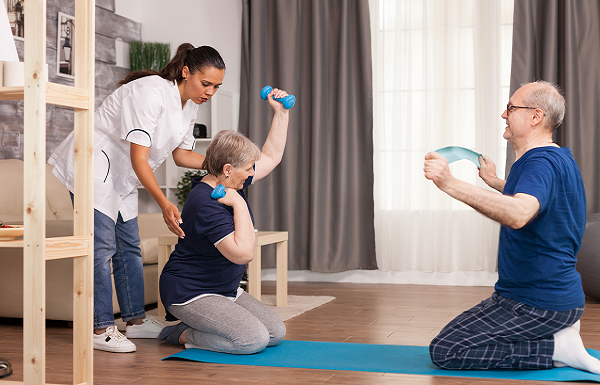
Regular movement supports strength, flexibility, and confidence for older adults who spend much of their time indoors. A steady routine encourages comfort during daily tasks and reduces stiffness that can build up during long periods of sitting. This extended guide explores simple movements that suit many ability levels, promote ease of motion, and foster a sense of independence in familiar surroundings.
- Seated Leg Raises
Seated leg raises provide a safe way to activate the lower body with minimal strain. Seniors can sit upright in a sturdy chair, keeping their back supported and feet flat on the floor. One leg lifts slowly, held for a brief pause, then lowered with care. The controlled motion supports thigh strength, which plays a key role in standing, stepping, or shifting weight.
Repetitions may begin in small sets, gradually increasing as comfort improves. Even modest effort contributes to long-term stability. This activity fits well into quiet moments of the day, such as during television programs or reading breaks. The goal is consistent, gentle engagement that keeps the lower limbs responsive.
Some seniors appreciate adding light ankle weights once they feel ready, though this should occur only after confirming comfort with the basic version. The priority remains smooth, steady movement that avoids any sharp sensation or excessive fatigue.
- Light Arm Circles
Arm circles encourage fluid motion through the shoulders, elbows, and upper back. Seniors may perform this movement from a sitting or standing position. Arms extend outward at a relaxed height, forming small circular paths. Slow pacing prevents discomfort and supports focus on form.
This motion nurtures mobility needed for lifting objects, grooming, and reaching high shelves. Many older adults describe improved ease during routine chores after practicing arm circles for several days per week. The movement encourages engagement through the upper body without forcing intensity.
Some individuals prefer alternating directions during each session. Small forward circles followed by backward circles encourage balanced activity throughout the shoulders. The key is calm execution, enough repetitions to feel gently warmed, and steady breathing throughout the exercise.
- Heel-To-Toe Standing
Heel-to-toe standing promotes stability by training the body to respond effectively to weight shifts. To begin, seniors place one foot directly in front of the other so the heel of the front foot touches the toe of the back foot. A countertop or sturdy piece of furniture serves as support. This stance is held for a few seconds before switching leg positions.
This simple activity contributes to greater confidence during daily steps, turning motions, and transitions between sitting and standing. Many falls occur during small changes in direction, so strengthening balance responses plays a meaningful role in maintaining safety at home.
Progress may involve increasing the length of each hold or reducing reliance on the support surface. Some seniors enjoy practicing near a hallway wall for added reassurance. Over time, improved stability becomes noticeable during household movement, grocery trips, or outdoor strolls.
- Gentle Marching in Place
Marching in place offers a comfortable way to stimulate circulation and keep the legs active. Lifting the knees slightly with each step helps mimic the rhythm of walking outdoors. Seniors can perform this exercise in a living room, kitchen, or any clear indoor space. Slow pacing works well for those with limited endurance, while others may choose a more energetic tempo.
This activity supports joint lubrication, leg strength, and coordination. It fits well into short time frames, such as waiting for water to boil or during a commercial break. Many older adults notice improved steadiness after including marching sessions throughout the day.
Some prefer adding upper-body motion, such as light swinging of the arms, to create a fuller routine. As always, the priority is comfort. Any sensation of dizziness or excessive strain signals the need to pause and rest.
- Wall Push-Ups
Wall push-ups strengthen the chest, shoulders, and arms without requiring the floor-based version. Seniors stand at arm’s length from a wall, place their palms flat, and bend the elbows to bring the body closer before extending back to the starting position. The movement resembles a traditional push-up but removes the strain associated with getting down to or rising from the floor.
This exercise supports the upper body functions needed for lifting light objects, rising from chairs, or carrying household items. Many older adults appreciate that this option increases strength gradually without overwhelming the muscles.
Distance from the wall can create slight variation in intensity. Standing closer decreases the challenge, while stepping a bit farther away increases it. Smooth execution remains the most important factor, focusing on steady breaths and controlled motion.
- Ankle Rotations
Ankle rotations keep the joints mobile, which supports comfort during walking and helps reduce the risk of tripping from stiff or sluggish foot movement. Seniors can sit in a chair, lift one foot slightly, and draw gentle circular motions with the toes. Several rotations in each direction help awaken the muscles surrounding the ankle.
This simple movement aids circulation and supports flexibility, especially in individuals who spend long hours seated. It suits morning routines, serving as a comfortable warm-up before getting out of bed or beginning daily tasks. Many older adults find that regular ankle motion contributes to more confident walking throughout the day.
- Seated Side Bends
Seated side bends target the torso, supporting flexibility that aids in reaching downward, turning, or lifting from shelves. Seniors sit upright with feet firmly planted. One arm reaches overhead, followed by a gentle lean to the opposite side. The stretch should remain comfortable, without forcing depth. After holding for a short pause, the motion repeats on the other side.
This exercise contributes to a more adaptable spine and helps maintain comfort during housework or dressing. It nurtures a sense of ease during movements that involve twisting or leaning. Regular practice encourages smoother transition between positions.
- Guidance for Building a Routine
A consistent schedule often produces the best results. Seniors may choose two or three exercises each morning, rotating through different groups of movements during the week. Many find success using brief sessions spread throughout the day rather than one long session. Hydration and comfortable clothing support the experience, though no special equipment is required.
. Gentle reminders foster a sense of motivation, particularly for those who struggle with routine building.
If your loved one could benefit from supportive care at home, reach out to One By One Home Care for compassionate assistance and dependable service. Our team is prepared to answer questions, explain available options, and help create safe daily routines built around comfort.
Leave a Reply